Discover how AI, modular construction, and flexible, future-proof spaces will redefine healthcare design in the year ahead.
Healthcare environments are evolving at a remarkable speed. As care models shift, technologies advance, and staffing pressures intensify, the built environment is being asked to do more than ever. Care environments today must support the patient experience, enhance staff well-being, streamline operations, and stand resilient for the long term.
Through recent conversations with healthcare leaders and designers—and insights gathered at the Healthcare Design Expo + Conference—we've identified critical themes shaping healthcare design in 2026 and beyond.
In short, flexibility, durability, and future readiness are no longer optional; they’re essential. Below, we discuss the most significant changes defining how interior design for healthcare spaces must adapt next.


AI is Transforming the Design Process
The role of AI in healthcare design is rapidly expanding. Artificial intelligence and analytics are being used to simulate patient flow, evaluate spatial layouts, and accelerate project timelines. These tools do not replace design expertise; they strengthen it by creating opportunities to make faster and more informed decisions.
For manufacturers, this shift highlights the importance of visualization tools like our See It Spec It™ rendering configurator and Revit drawing symbols. When designers model future-state environments, including family respite lounges or staff collaboration zones, they need adaptable, modular elements that move smoothly from digital concept to real-world installation. The more clearly we can help teams visualize their spaces, the more effectively they can design environments that perform.

Accelerated Timelines Are Reshaping Construction Strategies
Across the industry, tight schedules, constrained budgets, and limited labor availability are influencing how projects get built. These pressures are prompting organizations to adopt construction strategies that reduce complexity, improve quality, and keep projects on schedule.
As a result, interest in prefabricated and modular construction continues to rise.
Off-site fabrication improves consistency, reduces on-site disruption, and allows teams to work in parallel, accelerating timelines without compromising performance. Modular wall systems and pods are gaining traction for their ability to evolve with clinical needs. Because they can be reconfigured or relocated, modular walls support faster updates, continuous modernization efforts, and long-term cost control.

KI Wall reflects this shift, offering a flexible, prefabricated approach that supports a range of applications from patient care areas to consult spaces while maintaining predictable installation schedules and future-ready adaptability.
This shift also aligns with a broader trend: the expansion of care beyond the traditional hospital footprint. Ambulatory and community-based settings are increasingly multipurpose, serving as touchpoints for preventive care, diagnostics, education, collaboration, and even virtual visits.
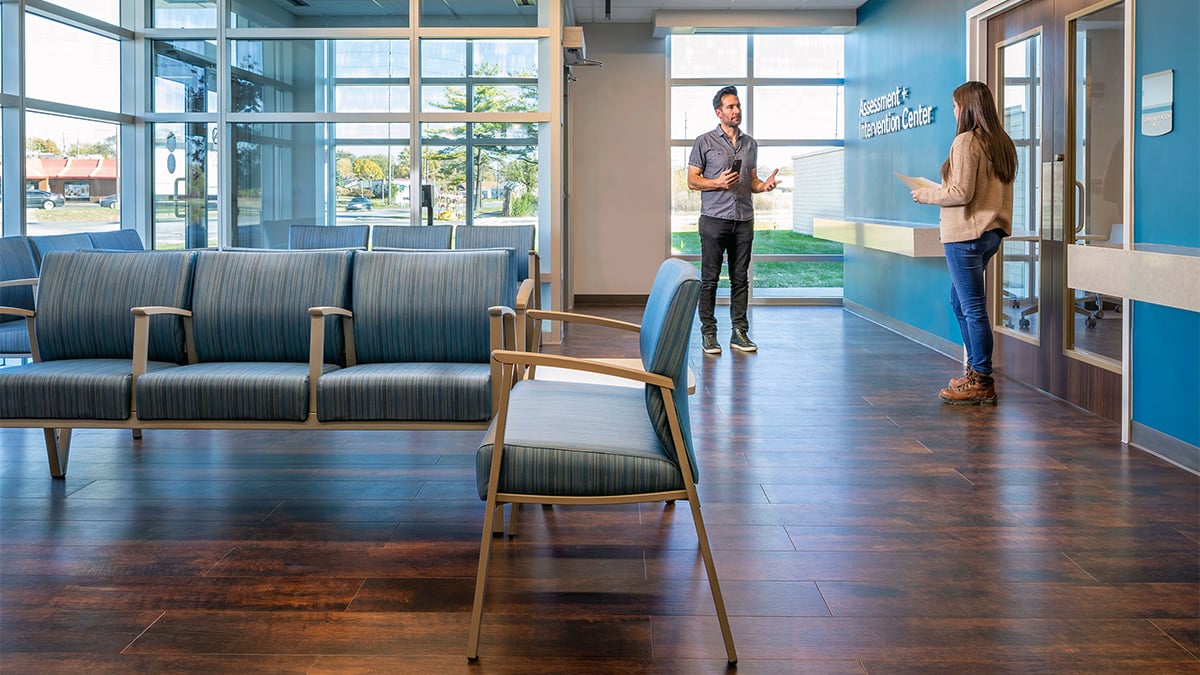
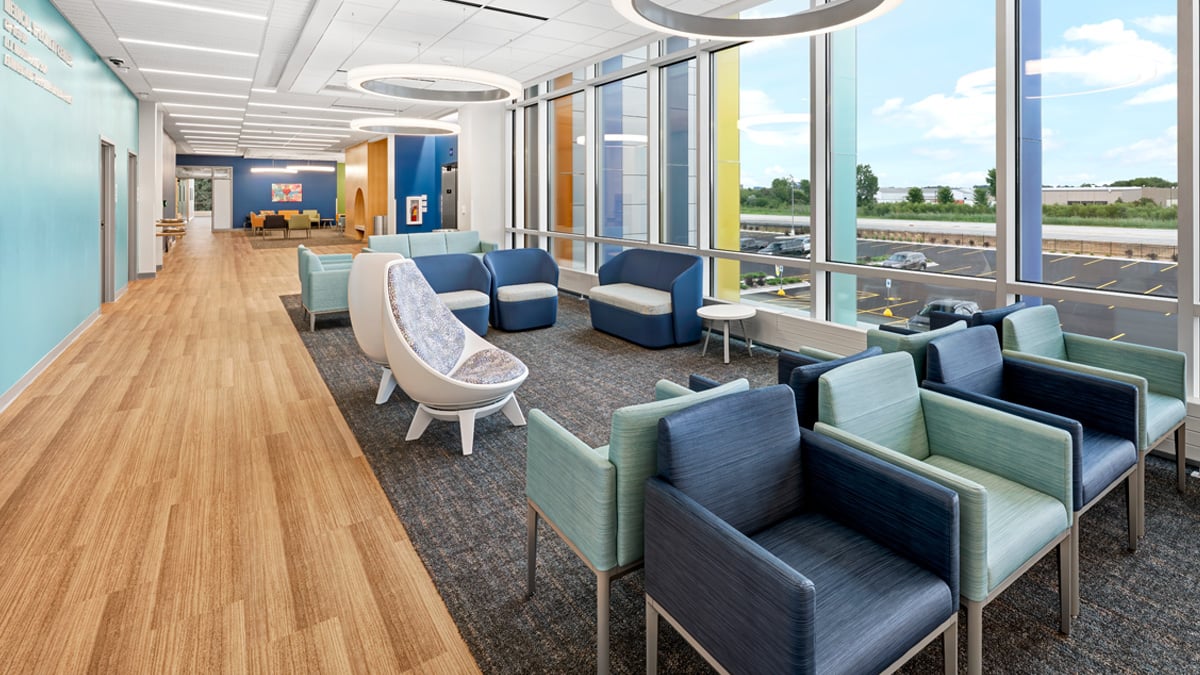
These spaces require furnishings that move and adapt as quickly as the care teams who use them; solutions that transition from private consultation to group discussion to technology-enabled care without sacrificing comfort or design continuity.
Together, these trends signal a broader expectation for speed, flexibility, and resilience in the built environment, demanding construction and furniture strategies that keep pace with the rapidly evolving nature of care.


Flexibility and Future Proofing Take Center Stage
If one phrase defined 2025, it was “future proof.” Designers are working to ensure that today’s exam room can function as tomorrow’s telehealth suite. They are also reevaluating staff spaces so they can shift easily between focused work, collaboration, and decompression.
Future-proofing also connects directly to workforce well-being. With care teams under considerable pressure, environments must support movement, focus, recovery, and connection. Furniture plays an important role.
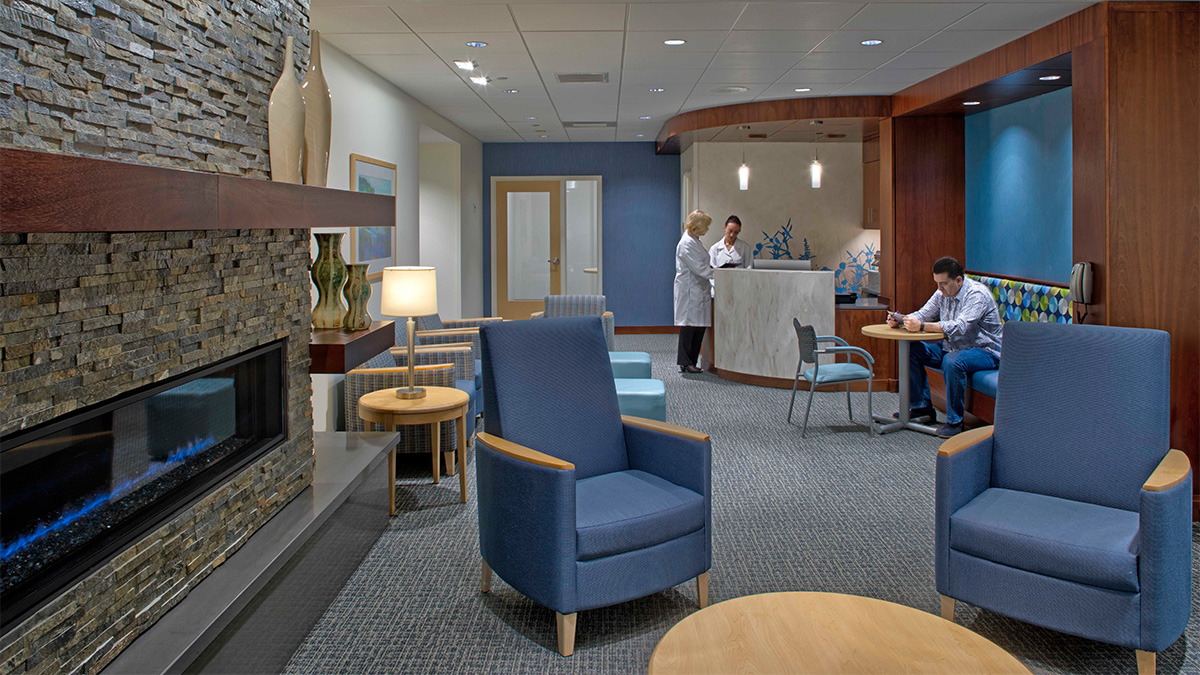
Flexible seating, ergonomic desks, and inviting lounge areas contribute to staff satisfaction and retention. KI solutions support these goals. They help create environments that allow caregivers to work effectively while also giving them spaces that promote rest and renewal.


(L) Lyra lounge seating; (R) Doni stack chairs and cafe stools, Athens tables
Looking to the Future of Healthcare Design
As healthcare continues to transform, one principle remains constant: Designing for change is designing for people. Spaces that anticipate uncertainty, support choice, and adapt over time create the most meaningful impact for patients, families, and care teams.
At KI, we believe in environments built for long-term value. These are spaces that support today’s needs while staying ready for whatever comes next.
If you’d like to stay informed on emerging trends, new research, and practical strategies for shaping healthcare environments, we invite you to subscribe to our insights list. You’ll receive periodic updates designed to help you make confident, future-ready decisions for the spaces you create.
Subscribe to Healthcare Insights