Explore insights from KI's design research leader on why traditional ergonomics falls short and how movement-based seating can support physical well-being, cognitive performance, and a more human-centered workplace.
Part One of a Three-Part Series on the Human System at Work — Body, Biology, and Neurology
I'm an 80s kid — Trapper Keepers, the Oregon Trail, paper footballs folded during class. We were promised flying cars. We had the Jetsons to help us picture it.
Here's the future I keep picturing instead. Meet John: hover chair, screen in his face, and when he tips over, he can't get up — a turtle on its back, or Randy in A Christmas Story, arms pinned inside his snowsuit. John needs robots just to get back into his chair, only to learn he can finally return to Earth with a warning that he and his fellow passengers aboard the Axiom may have suffered some “slight bone loss” and might just want to get a few laps in around the jogging track.
John wasn't neglected. He was accommodated with comfort engineered so completely that it atrophied not just his body, but everything underneath it.
That's not science fiction. That's the trajectory of the modern office chair.
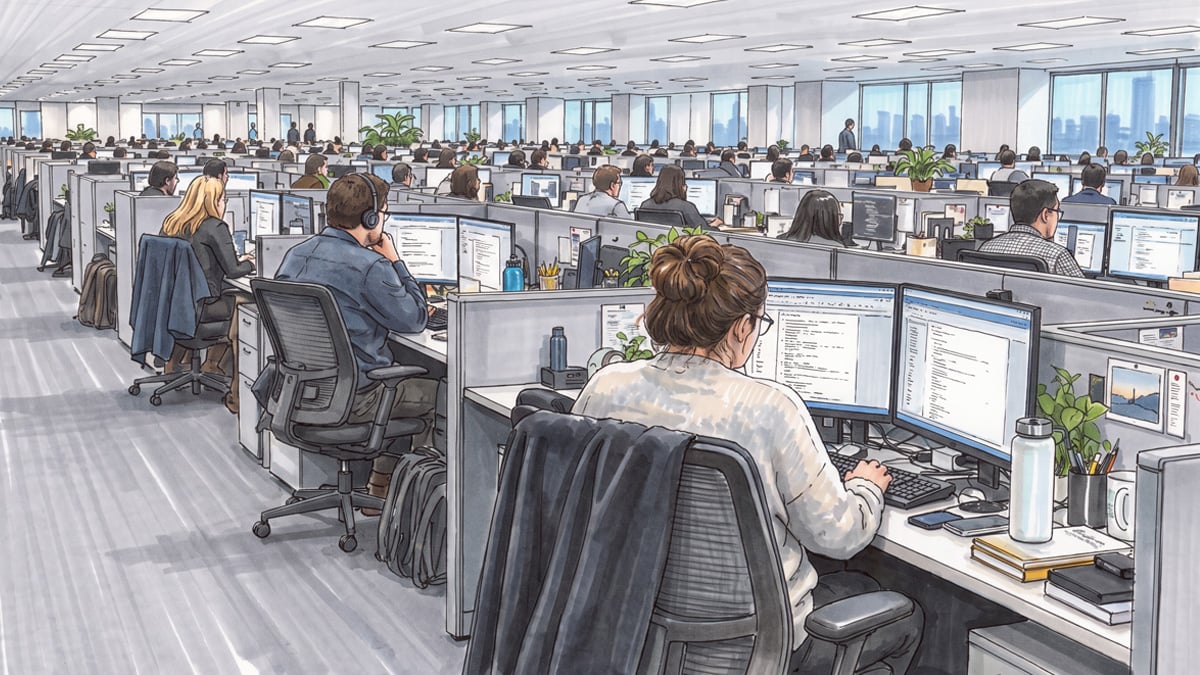
For a decade, ergonomic seating has been built on a single belief: The chair's job is to support the human while they sit still and work. That belief has quietly optimized an entire industry for stillness, even as the body sitting in the chair was built to move. Add screens and headphones to the equation, and stillness compounds into something the body was never designed to sustain.
We've explored why comfortable seating should support natural movement, but the implications of prolonged stillness extend well beyond physical discomfort.
At KI, we've spent the past few years asking not how to make sitting more comfortable, but how to design for the whole human system—body, biology, and neurology—within the reality of a workday that still requires a chair.
Let's start with the body.
Explore the research connecting movement, cognition, and human performance in our upcoming The Performance Paradox CEU.
The First Miss: Why Traditional Ergonomic Seating Falls Short
As a qualitative researcher whose background is in design, I'll tell you plainly: Ergonomics, by definition, means designing the workplace to fit the human body, not forcing the body to adapt to the work.
Read that again.
Then look at what the industry has actually built: More levers, more adjustability, more comfort, all converging on the same unspoken goal — sit still, more comfortably.
In the late ’90s, Dr. James Levine began studying sedentary behavior and low levels of NEAT—and what happens to human physiology when movement starts disappearing from daily life. By 2010, the warning had made its way into the national conversation with a headline almost everyone has heard: “Sitting is the new smoking.”
That was 16 years ago. Levine’s research began nearly three decades ago. And yet, how much has the fundamental idea of workplace seating really changed? We’ve gotten very good at designing chairs that make sitting more comfortable, but all I can think is that we’re about ten years away from another national headline announcing something we should already know: “Humans need to move.”
We can’t wait another ten years for that realization to catch up with the way we design – not when we already have data showing what happens to the human body after hours of sitting, even in some of the best ergonomic task chairs the industry has to offer.
Three Things Working Against the Body: How Modern Work Environments Reinforce Sedentary Behavior
A chair, a pair of headphones, a screen. Each is solving a real problem, and each ends up creating the same one — stillness, held too long. Let's explore them for a moment.

The chair. A 2023 University of Waterloo study put pain-free adults through four ergonomic chair configurations. Of those participants, 39% still developed measurable pain despite improvements in posture. Separate biomechanical research found sitting loads the spine harder than standing (1,698 N vs. 1,076 N). Walking loads it more, but only in brief spikes, each followed by release. Movement is the relief valve. No amount of lumbar support substitutes for it.
The headphones. The World Health Organization (WHO) safe-listening guidance caps exposure at 85 decibels for 8 hours, and that window halves with every additional 3 decibels. In a loud office, volume creeps past that line without anyone deciding it should. Once the headphones go on, they stay on, at whatever level solved the problem an hour ago. No relief valve there either.
The screens. Head tilt turns a 10–12-pound head into an effective 40–60-pound load on the cervical spine. Blink rate drops from 22 times a minute at rest to 7 while looking at a screen. The posture doesn't reset between emails. The blink rate doesn't recover mid-task.
Three different mechanisms. One shared root cause: Nothing moves.
Add the commute—27 minutes each way for the average American worker, nearly 70% of it behind the wheel—and the workday is bookended by more of the same stillness it's built on. I see the effects of it every evening: 5:30 zombie mode, speed limit is 65, and everyone's going 40. It's the same state of malaise as my 60-pound, 11-year-old Australian Labradoodle taking a walk on a 95-degree day. But he's got an excuse (he's furry and old). We don't.
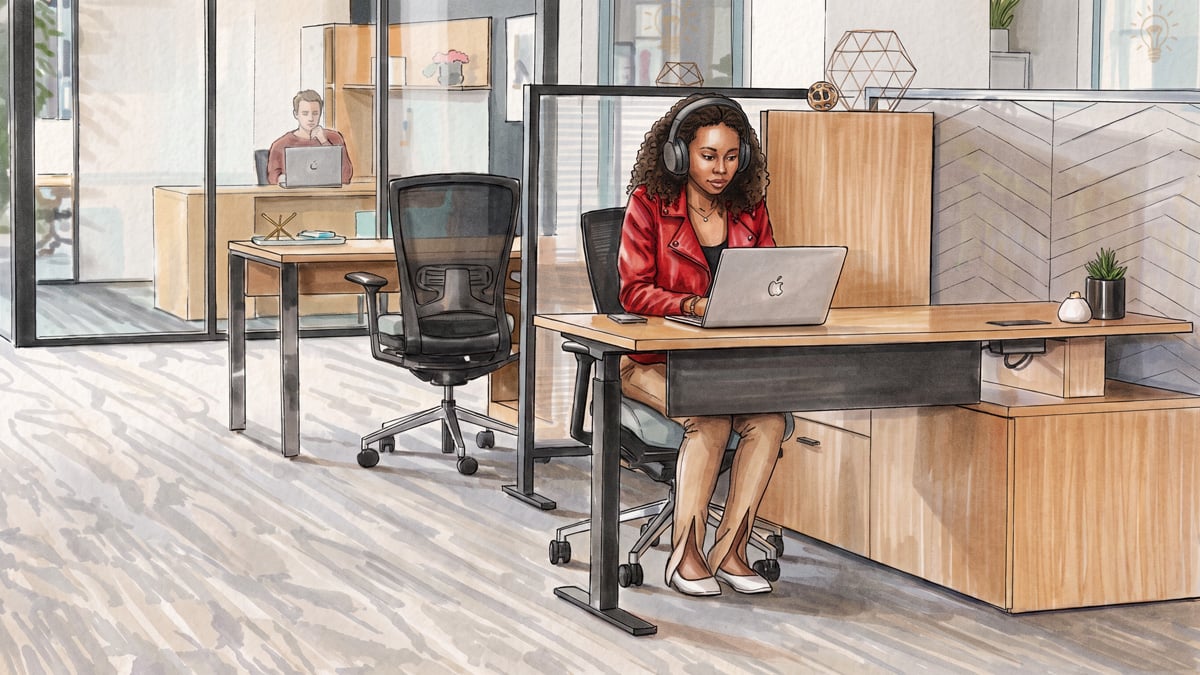
The Beautiful Constraint: Rethinking Ergonomic Seating by Designing for Movement, Not Stillness
More features haven't fixed this. A 2024 Oxford study of 46,000 workers across 233 organizations found employees using standard wellness interventions — mindfulness, coaching, sleep apps — were no better off than those without them. The industry has plenty of comfort to offer. It has very little movement.
And the constraint isn't going away. The share of the workday spent seated has climbed for decades, from roughly 30% in the glorious '80s (I promise, my last reference to that wonderful decade) to over 90% by 2019. Seated work isn't a problem to design around. It's the reality to design for.
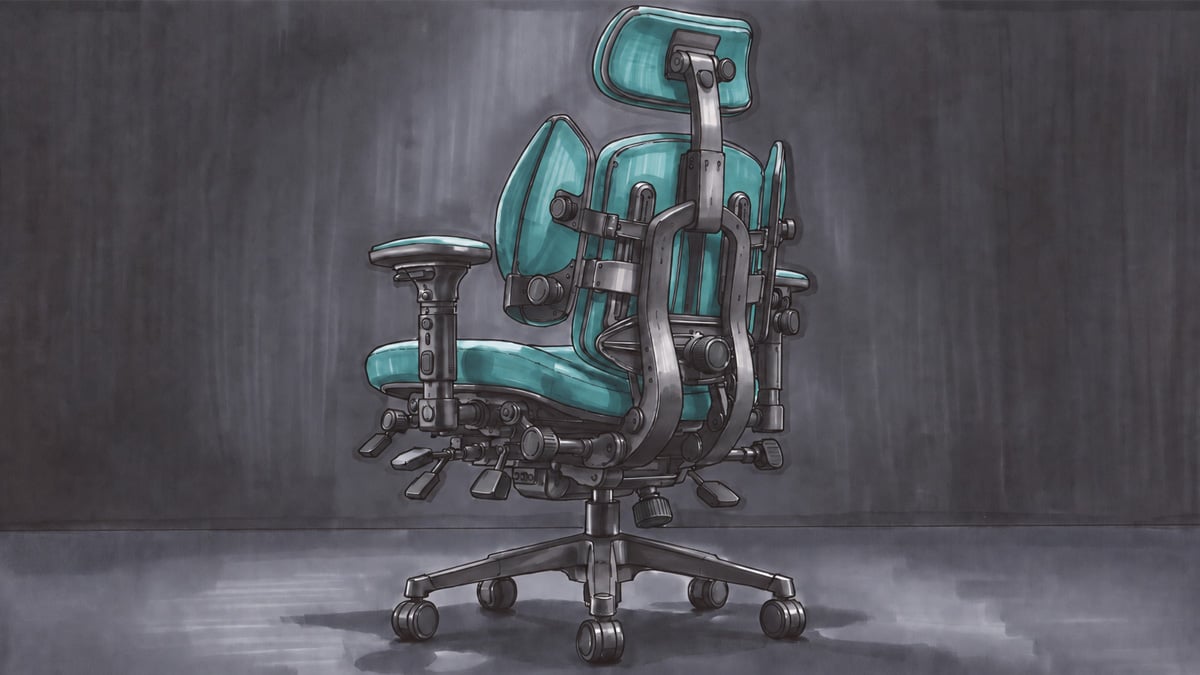
That's the question we at KI set out to answer: How do you design for movement inside the constraint of sitting?
See how the Kiaura Collection, built with Cognetic Technology, is designed to keep the body in motion, fluidly, while seated.
Even the pull toward simpler technology is real. I've got a deposit down on a deliberately analog pickup truck – no touchscreens, no subscriptions. Its future owner will still be sitting. The constraint doesn't disappear because we wish for simpler times. It has to be designed for.
Cognetic Technology: Bringing Natural Movement to Ergonomic Seating
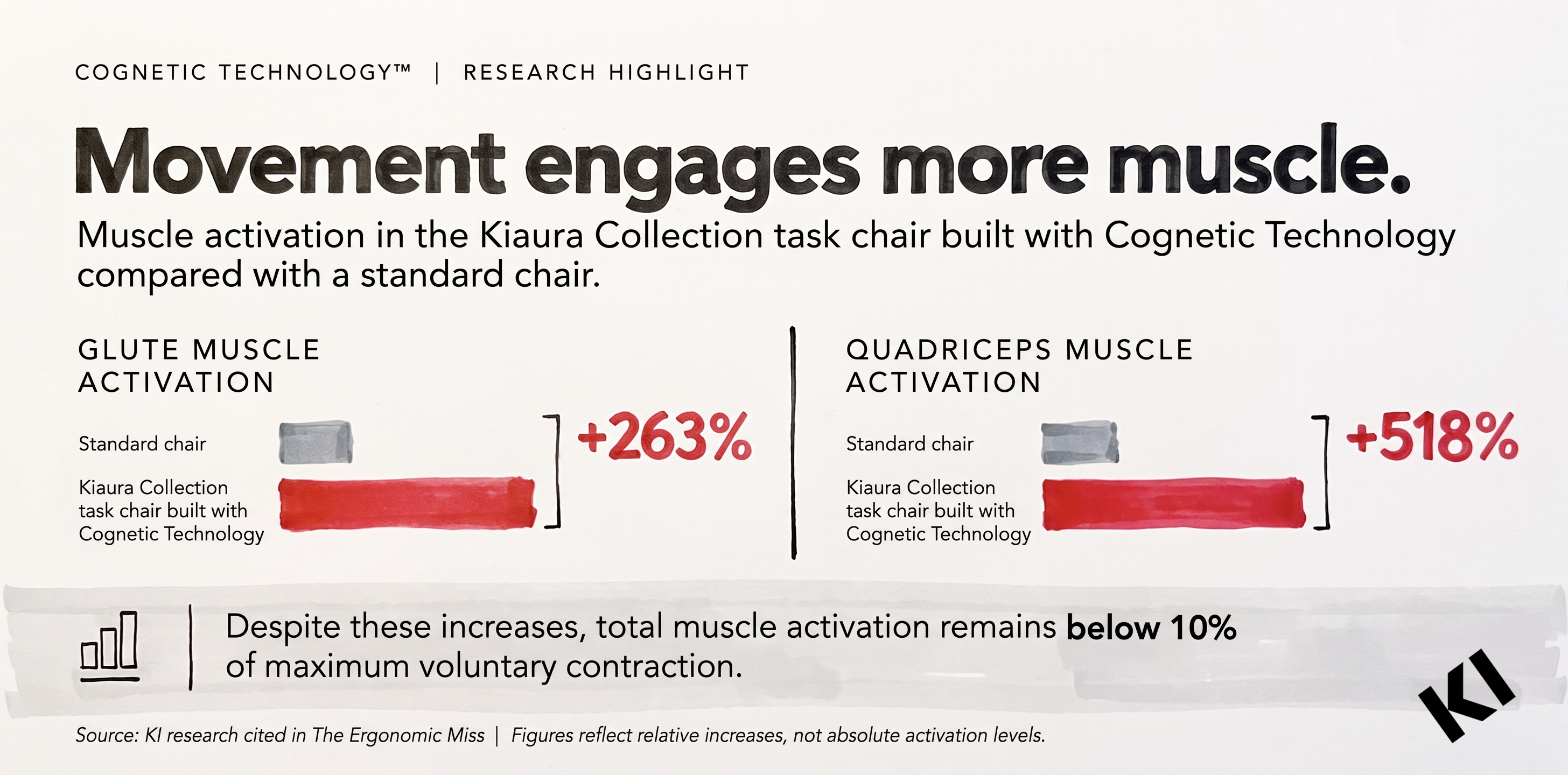
The Kiaura Collection™, built with Cognetic Technology™, designed and invented by Aaron DeJule, is our answer. We know from our own research that a user sitting in Kiaura task for their office desk chair sees, compared to a standard chair, the following benefits:
- 263% increased glute muscle activation
- 518% increased quad muscle activation
To be clear, this isn't the chair working the body harder. Even at these increases, total muscle activation remains well under 10% of maximum voluntary contraction – far below any threshold associated with strain or fatigue. It's a chair that stopped asking the body to hold still, engaging the same muscles that standing, walking, or simply living already do, intermittently and naturally.
The Impact of Movement on Muscle Activation and Cognitive Performance
In preliminary research involving a four-hour work session, users seated in a chair built with Cognetic Technology experienced:
- Improved cognitive processing and cognitive performance during seated work.1
- Up to a 30% reduction in anxiety.2
- Reduced stiffness, pain, and discomfort associated with prolonged sitting.3
The qualitative researcher and designer in me also loves the true human stories that come from real office workers experiencing the Kiaura task chair during their workday. If what we are doing is turning the office chair into a human performance tool built for movement, we need to measure what’s happening quantitatively while also recognizing that, qualitatively, the human response matters.
As quoted in Manoush Zomorodi's The Body Electric, a 1954 North Carolina State social studies professor named Herbert Collins observed that the seated figure of the 20th century was unmatched by any conventional posture in the past — that the chair, of one sort or another, settles the worker into his sedentary occupation.
Seventy years later, we're still settling. We think it's time to unsettle it.
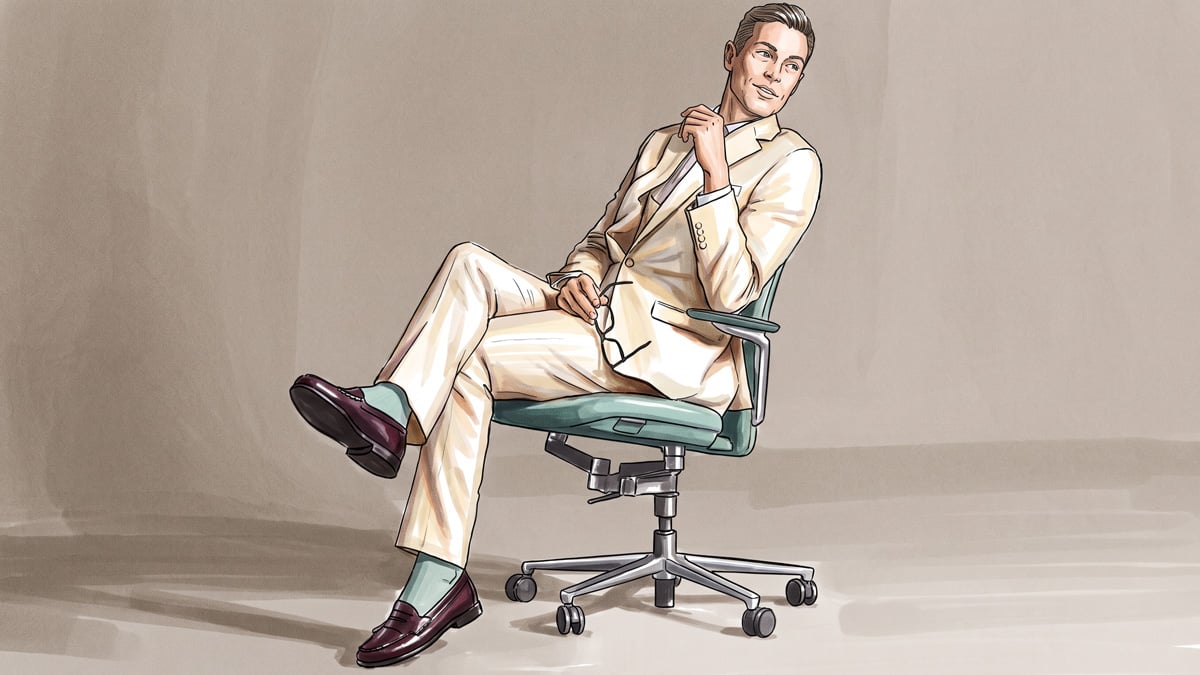
With Cognetic Technology, seating can now be a human performance tool built for movement.
From Ergonomic Comfort to Human Performance
If you're an interior designer or space planner who specifies chairs for a living, here's the part that matters: This isn't an argument that ergonomics was wrong. It's that the industry answered only half the question.
Your clients won't feel the greatest differences between better lumbar support and a chair that actually moves with them on day one. They'll feel it in month six in the absenteeism report; in the employee who stopped noticing their back.
That's the difference between specifying comfort and specifying performance.
Part Two of this blog series looks at what stillness does to human biology beyond the muscle and the spine. Part Three looks at what it does to the mind. If you specify chairs for a living, both are worth your time. Subscribe to future insights.
You can also hear me (and see me!) live on your screen of choice at our upcoming virtual CEU called The Performance Paradox. I'll share all about design for movement and human performance ... and more. Don't miss it.
Research References
1 Third-party four-hour study; Test of Information Processing Skills (TIPS); vs. traditional seating, 2025
2 Third-party four-hour study; Beck Anxiety Inventory; vs. traditional seating, 2025
3 Third-party four-hour study; McGill Pain Questionnaire 2 (SF-MPQ-2); vs. traditional seating, 2025