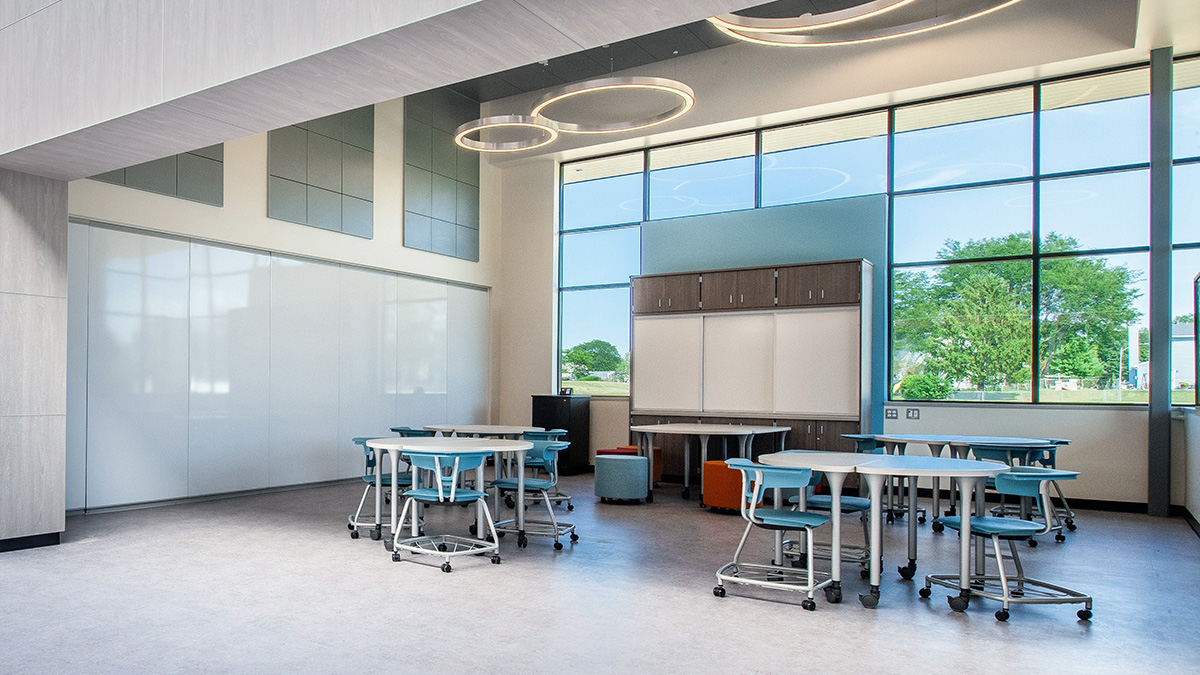
This fall, many schools and universities will welcome students back for in-person learning for the first time since before the pandemic. For faculty, staff and district leaders, this presents both an exciting opportunity and a challenge. After all, educators want their staff and students to return to a space that’s safe and inviting.
Fortunately, the government has made federal funding available to support students’ transition back to school through the CARES Act, the CRSSA Act and the American Rescue Plan.
Schools can use ESSER funds from these programs for everything from buying laptops and upgrading HVAC systems to training staff and hiring new teachers.
Following are additional ways we’re seeing schools and universities leverage this funding.
Create Flexible, Cleanable Spaces
At a state university in Missouri, staff hoped to transform their classrooms so they would be better suited to adapting to change. They wanted to replace “long or odd-shaped tables that may seat multiple students but limit class configuration.” Staff asked for a collection of classroom chairs with tablet arms “to promote social distancing while maximizing class configuration.”


This college also prioritized sanitation for their school furniture. Staff requested new desk chairs and lab stools in their health sciences and business centers, where the wear and tear on older seating made it more difficult to clean. According to their funding request, “the new chairs will be made of materials that can be sanitized to mitigate the spread of COVID-19.”


Accommodate All Students
At a community college in the Midwest, staff wanted to support students who “don’t have enough time or resources to attend a virtual class” when they’re away from campus. They envisioned a space for these students on campus where they could log into a virtual class in between attending their in-person classes.
In the funding request, staff identified four major considerations: “privacy, cleanability, enough space for books and class materials and appropriate technology for students to attend class.” To give these students a safe, private learning space, staff requested height-adjustable desks with frosted acrylic privacy panels and built-in charging ports.


Close the Learning Gap
In Pennsylvania, one K-12 assistant superintendent requested ESSER funding to create designated tutoring spaces for students who struggled with remote learning during the pandemic. Specifically, the district is planning to transform media centers at all of its schools into tutoring centers to help close that learning gap and support students who need it the most.

Making the Most of the Situation
No matter how schools decide to leverage funding, it’s important that they don’t let it go to waste. Contact your state’s department of education to determine when local districts must submit requests for funding -- and keep those critical deadlines in mind.
For more information, the U.S. Department of Education offers an online guide to the following sources of COVID-19 relief funding for schools:
- CARES Act and CRRSA Act:
- Elementary and Secondary School Emergency Relief (ESSER I and II)
- Governor’s Emergency Education Relief Fund (GEER I and II)
- American Rescue Plan:
- Elementary and Secondary School Emergency Relief (ESSER III)
How are you planning to transition your learning spaces and welcome students back? I’d love to hear about it! Give me an update at bryan.ballegeer@ki.com.