Live immersive installation powered by Cognetic Technology™ transforms human movement into real-time, one-of-a-kind artwork
A change of scenery always brings a fresh perspective—and new possibilities. Leading furniture manufacturer KI’s recent move from the Merchandise Mart to Fulton Market in Chicago is a prime example. After more than 50 years at home in the Mart, this relocation marks more than a change of address: It signals a broader evolution for the company as it further embraces experiential design, immersive technology, and innovative new ways of thinking about the nextgeneration workplace.
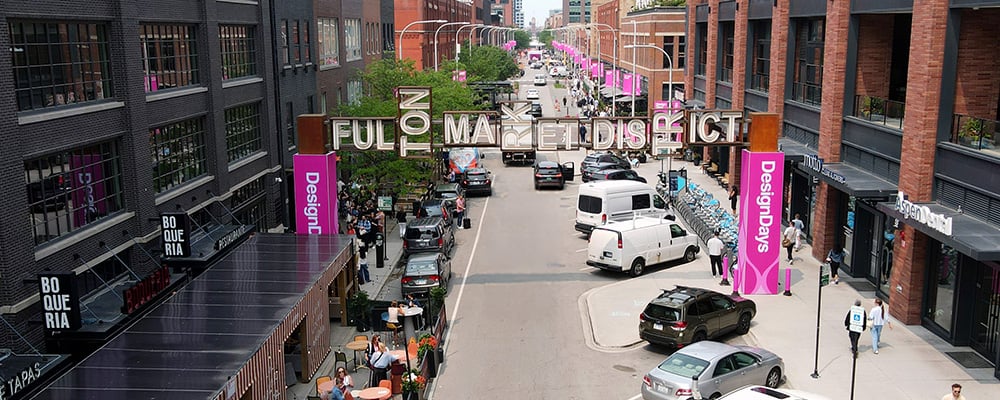
For KI leadership, the decision to relocate was rooted in both geography and momentum. In the past several years, Fulton Market has increasingly emerged as a hub for contract furnishings brands, with major manufacturers establishing standalone destinations throughout the district in an effort to create more distinctive, individually branded experiences for both clients and designers. KI saw the move as an opportunity to align itself more closely with where the industry is heading—not only physically, but strategically.
Tony Besasie Chief Sales and Marketing Officer
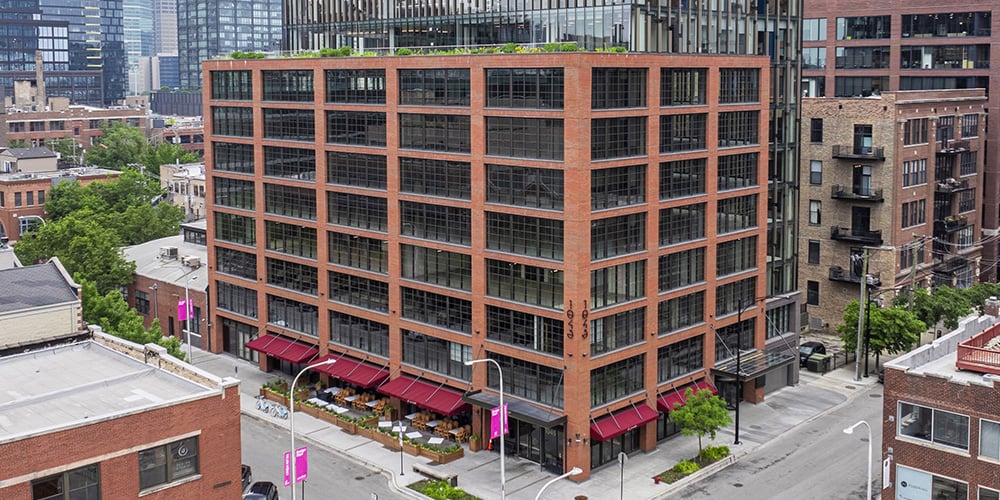
Located on the eighth floor of a glass-wrapped building at Aberdeen Street and Fulton Market, the approximately 13,000-square-foot space places KI among many of the industry’s leading brands such as Allsteel and Herman Miller. “We believe the area is really becoming the epicenter of where design is taking place in the city of Chicago, and we felt like this was an opportunity for us to show the next evolution of KI,” Chief Sales and Marketing Officer Tony Besasie explains. “You’re going to see a new level of aesthetic and experience. We’ll continue to be known for great engineering, great product quality, great durability, and great service, but we’re [also] focusing in on some other areas that we think the market is ready to see from us.”
Surrounded by restaurants, hospitality spaces, and neighboring showrooms, the location provides a markedly different atmosphere than the traditional structure of the Merchandise Mart. Repeatedly describing Fulton Market as a “neighborhood experience” rather than a self-contained destination, Besasie says that distinction played a major role in the company’s decision-making process. While the Merchandise Mart remains one of the design industry’s most recognizable landmarks and KI’s relationship served them well, the team viewed Fulton Market as offering greater flexibility for brands to establish their own identity and atmosphere.
Central to that shift is KI’s decision to move away from the traditional concept of the showroom altogether. Instead, the company is introducing the idea of an Inspiration Center, a term intended to reflect evolving expectations around how designers interact with brands, products, and spaces today. “The industry often refers to these spaces as showrooms, right? But we think of that as a bit of a dated term,” Besasie explains. “When we speak with interior designers, they’re really here to be inspired. That’s our goal.”
The physical environment reinforces that philosophy. Seeking a cohesive design language for the Inspiration Center, KI partnered with Chicagobased design firm Whitney to develop a concept called Industrial Whimsy. Rather than pursuing a highly formal or exclusive atmosphere, the company wanted the surroundings to feel approachable while still reflecting KI’s expertise in manufacturing and product development. “It fits our tone and personality so well as an artful play on engineering and industrialization,” Besasie says.
The resulting design language introduces softer hospitality-inspired elements alongside workplace functionality, creating a space intended to feel both sophisticated and welcoming. The single-floor setting is organized around spaces for concept development, casual lounge areas, experiential product vignettes showcasing KI furniture solutions, KI Wall systems, and Pallas Textiles, and hands-on material design labs. These dedicated areas will highlight workplace, higher education, architectural wall and textile solutions, while allowing the company flexibility to rotate additional healthcare and K-12 applications into the space over time.
In the new environment rather than static displays, technology integration plays a major role through large-scale LED visualization walls that support digital flythroughs, interactive presentations, and full-scale project renderings. “We’re leaning into AI and generative AI. We think that touch, feel, and all the other sensory experiences are important,” Besasie says. “[The integration] gives us the ability to showcase the possibilities in a life-size environment. Not only will visitors see our interpretation of design and how we’ve designed our spaces, but we are now also providing a canvas for them to sit down with us, collaborate, and be inspired by what’s possible."
Natural light and hospitality-driven amenities further shape the experience. Unlike many other traditional showroom environments, KI’s Inspiration Center features floor-to-ceiling exterior glass, expansive city views, and access to rooftop areas that the company plans to use during Design Days and for events and gatherings throughout the year. “We’ve never had that before,” Besasie says. “We’re so excited about it, and we just launched an outdoor line this year, so we’re considering ways to expand into more integrated spaces.”
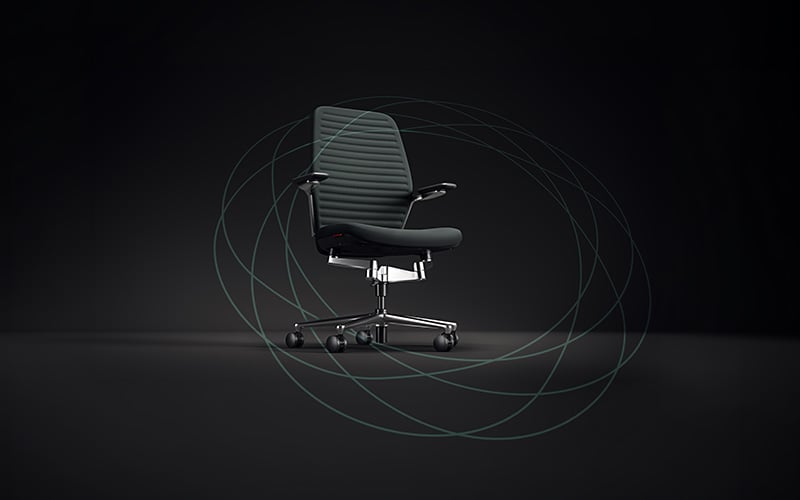
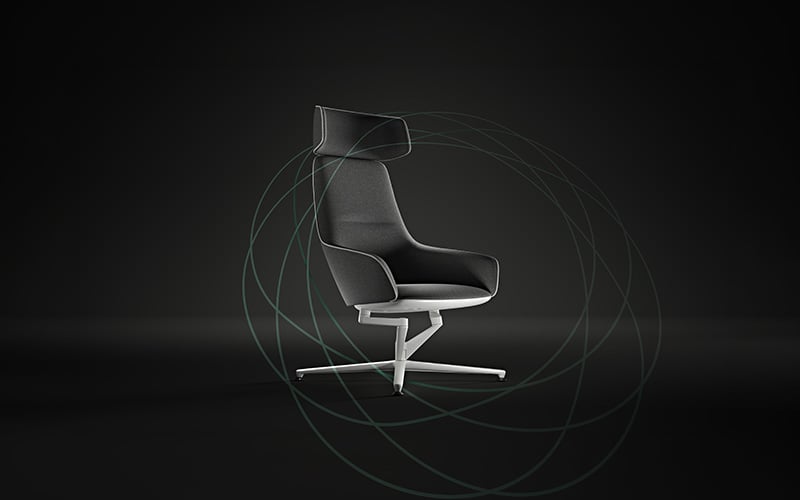
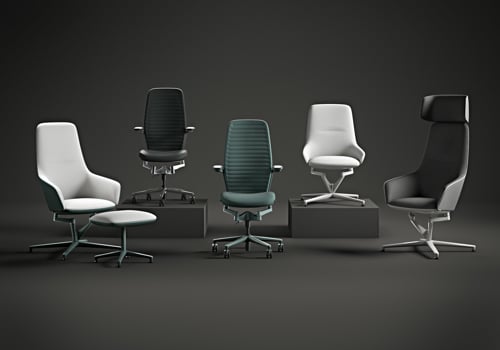
KI’s future-focused ambitions extend beyond the Inspiration Center itself. Alongside that launch, the company is using Design Days to debut one of its most ambitious product launches to date: a new seating platform centered around cognitive technology. “We had a very talented designer who worked at KI named Aaron DeJule. He went out on his own, but we still maintain a relationship with him,” Besasie says. “About 9 or 10 years ago, he was in a really rough car accident and had trouble sitting. He started to design a chair to relieve himself of back pain. He then brought it to our design and development team to partner on the launch.”
After spending several years refining the engineering and conducting additional research surrounding ergonomics, movement, and user performance, Aaron partnered with the KI team to manufacture the design. Instead of focusing solely on additional ergonomic adjustments and controls, the platform Aaron invented takes a different approach by encouraging continuous micro-movements designed to support the body’s natural equilibrium. According to the KI team, this technology enables users to move more freely while seated, helping promote circulation, reduce pressure points, and support overall comfort during long periods of work.
KI is also exploring how those movements influence cognitive performance and focus, citing ongoing research into the relationship between neurotransmitter activity, physical movement, and workplace wellbeing. “What you’re doing [with this chair] is not only physiologically improving your performance, but we believe you’re also improving neurologically. We have some quantitative tests which have validated that,” Besasie explains. “There are neurological benefits that help support focus, greater acuity, and lower stress. We believe we’re onto a completely new way of sitting, which is why we’ve launched it as a technology that’s going to be applied across a variety of seating applications.”
The platform’s introduction aligns with KI’s unveiling of the new Inspiration Center, underscoring what the company sees as a larger shift in how workplace environments are designed and experienced. For KI, the move to Fulton Market ultimately reflects more than a new showroom strategy—it represents a broader rethinking of collaboration, movement, technology, and the role design plays in shaping the future of work.
By clicking "Accept All Cookies," you agree to the storing of cookies on your device to enhance site navigation, analyze site usage and assist in marketing efforts. For more information, see Website Privacy.