- What's New
- Pricing & Purchasing
- Lead Times
- Literature & Samples
- Services & Warranties
- Careers
- Find a Rep
Explore This Section
KI In The News
Furniture Manufacturers Focus on Healing Comfort
Health Facilities Management
October 28, 2026
This is an excerpt from an article. To view full article, click here.
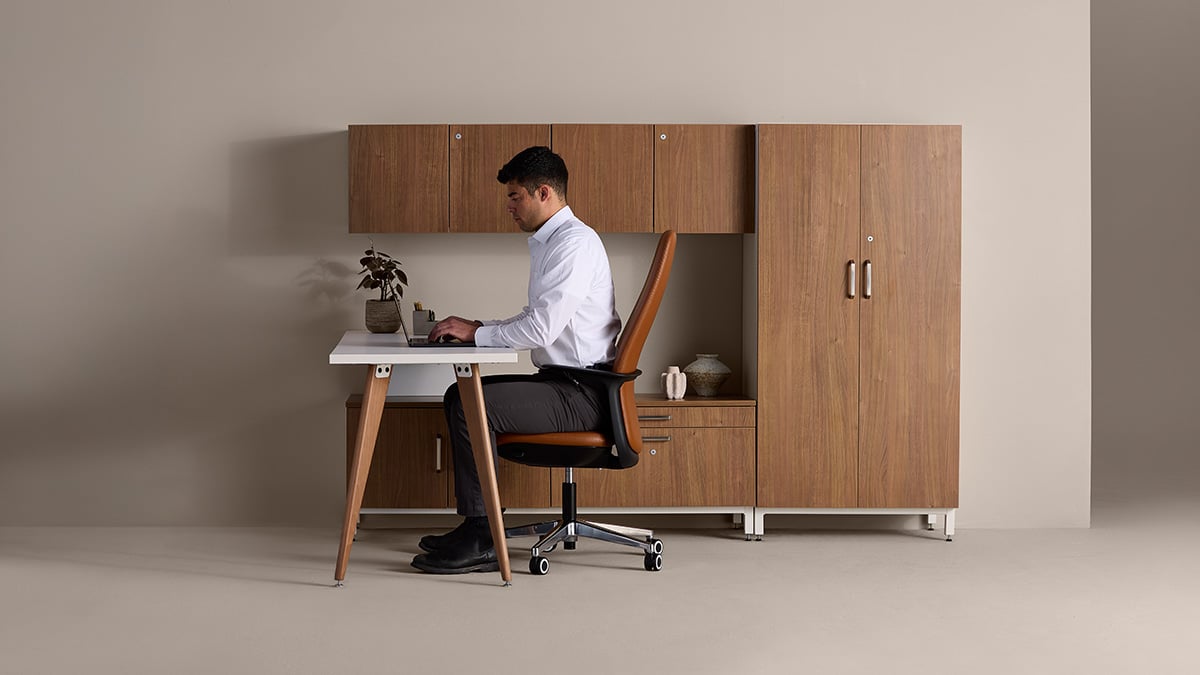
New designs promote well-being, sustainability and ease of maintenance
Furnishings manufacturers are prioritizing the patient experience in their new product introductions, with patient-centered design now a fundamental principle supporting healing, dignity and comfort.
Additionally, more furnishings are hospitality-inspired. This means ergonomically supportive furniture for caregivers and patients — universal, modular designs that support a wide range of users, body types and mobility without stigmatization. Sustainability, replaceable components and serviceability are other features.
Manufacturers also incorporate an understanding of trauma in the design process to better support recovery and patient well-being by offering approachable aesthetics, comfort and durability without an institutional feel.
Hospitals continue moving procedures to ambulatory and clinical settings, which increases demand for flexible furniture solutions that support fast patient turnover and multipurpose spaces.
Finally, many health care systems are prioritizing renovations and adaptive reuse. From a furniture perspective, this requires flexible, durable products with smaller footprints.
Furniture facts
Manufacturers are using new materials and designs to meet health care needs, such as infection control, cleanability and bariatrics. This includes nonporous, durable materials with minimal seams to support rigorous disinfecting protocols, as well as welded steel frames, corrosion-resistant coatings, antimicrobial materials and solid-surface options for tables.
Additionally, high-load seating options include chairs tested to 400 pounds and bariatric models tested to 600 pounds. Safe design details include overhang arm caps for assisted ingress and egress, and wall-saver legs that protect surfaces.
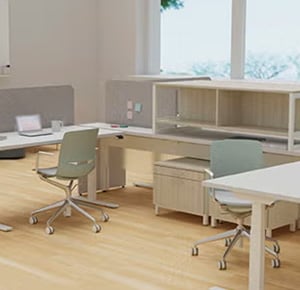
For administrative spaces, KI in Green Bay, Wis., offers the Passel furniture solution, which is well-suited for a range of health care environments. “As a desk system, it’s easy to plan and implement for administrative staff in medical office buildings and other workstation settings,” says Jonathan Webb, LEED AP, director for workplace and health care. “Its intuitive, beam-based design also supports educational and training spaces for staff, offering flexibility as needs evolve. With simple, adaptable power and technology integration, Passel accommodates a range of tools and workflows to enhance administrative care spaces.”
Evolving care, changing needs
Webb at KI sees more intelligent furniture on the way. “These products will increasingly integrate sensors, power and connectivity that support clinical workflows and provide useful data — things like patient presence, utilization rates or caregiver ergonomics,” Webb says.
IMPROVED EFFICIENCY
The Passel desk system features simple, adaptable power and technology integration and accommodates a range of tools and workflows.